I don’t have much of a romantic bone in my body. I will admit to being a bit more the hopeless romantic at one time, and it showed in my writing: the idea of eternal love, the “one.” In many ways, I shared many qualities with Anna from Frozen as she contemplates finding her “one” as her world opens. However, as Anna discovered, life is seldom so neat . . . though she probably still found her “one” before the movie wrapped up (It’s Disney. They love their pairing).
This realization, as a young adult, that in life we are, well, human–it soured me on romance by killing its idealism. I even reworked my fantasy novel to remove a wedding and throw in some romantic roadblocks. Even despite that, I still couldn’t completely kick romance to the curb and kept two really good couples in that book. And now as I get older, my views on romance have morphed to embrace the humanity involved in it, that it is our human flaws and shortcomings that create memorable, enjoyable romances.Continue reading “Don’t forget the ordinary moments”
To borrow a phrase from Nick Fury (and countless other people over the years): “This isn’t my first rodeo.” I’ve queried before, often to no luck. Rejection happens more often than not: The publishing industry is a hard nut to crack. You just have to dust yourself off, get back up, and continue to submit, potentially with a new project. Doing just that was a tough decision for me. I put so much effort and time into Passage–its characters, its plot, its worldbuilding. However, as my SciFi novel grew and took shape, I had to acknowledge it had the best shot in the current market, so I put all my effort into bringing it to fruition.
Now Heritage Lost is wrapped up, and I’m putting together query letters and a synopsis while also toying with the idea of participating in #PitMad, which is Feb. 11. My ultimate goal is to begin querying agents throughout February, hopefully tantalizing one to bite.Continue reading “So Begins The Jump”
Utter failure. That is really the only way to describe this year’s NaNoWriMo attempt. Illness struck quickly, taking a week, and then apathy swooped in and killed any desire to continue the trek onward. Really, does the world need my books? Are they really worth anything (not necessarily talking monetary value here)? I’ve been really delving into those questions a lot lately, among others.
One thing I can say about this epic car wreck of a failure is it did open my eyes: I have myself spread too thin and I’m not functioning in a productive manner. I need to break some bad habits and get back to being a functioning person, rather than responding to crisis after crisis and just generally being unhappy.Continue reading “How does a person get their $*** together?”
Join in the madness at http://www.NaNoWriMo.org. It’s crazy, but so worth it!This is me right now. (Side note: I have my tablet working again!)
In the background of my head, Europe’s famous riffs loudly declare “It’s the final countdown!” And my countdown is now practically three days — three days and the madness of National Novel Writing Month descends upon me. I’m not ready for this! Frantically, I look at my outline: It only stretches from Chapter One to Chapter Fourteen — then there is only blankness. Also looming over my head is the incomplete final read-through, where I’m in Chapter Six of Eighteen. WHY IS THERE ALL OF THIS FINAL-NESS IN MY LIFE RIGHT NOW?! And where the heck did October go?! Ah, yes. Work invaded my personal time and held it hostage. But no matter, it is times like this that test one’s mettle — or some other platitude that people like to throw out.Continue reading “It’s the final countdown — NaNoWriMo prep”
What are you doing? Well, that wasn’t planned, but that kind of–Now what are doing?! No, that isn’t in the plan! You weren’t supposed to do that until Chapter Eight. Stop that, this isn’t your scen–Why do you have swords? Why are you pointing them at me? What-what are you doing?! No, no–I need to have control of the helm … but you don’t know how the story is supposed to go …
It happens occasionally: You have your story carefully outlined and planned; your characters are fleshed out and ready to go; and then you wade into your story–only one character, or maybe of a group of them, hijacks the story. In a way, this is a good because it means your characters are fully developed to the point–like living, breathing people–they have thoughts, desires, dreams, fears, etc., all of which shape their actions. What could be better? Writers, after all, go to great lengths to achieve strong, well-rounded characters. But then, there is a revolt–the characters seize the helm: They can either steer the vessel, your book, into a vast ocean you hadn’t thought to explore or into a reef, where your novel either becomes stuck or sinks to Davy Jones’ Locker.Continue reading “Writer, this here be a mutiny”
There’s still some life in me, even after this summer!
Whew! It’s been a long time since my last post–about three months, actually. But don’t fear, there’s still life in me; it’s just that summer is always hectic at my place of employment. Luckily, it is wrapping up, and we are now down to two special insert tabs, so there aren’t a lot of extra assignments to worry about on top of my normal assignments. With this in mind, I feel positive that I will be able to resume posting regularly again.
For this return post, I figured I’d update everyone on my current projects and what else I’ve been up to before returning to the regular writing-themed posts.Continue reading “I’m not dead yet!”
This post is in honor of Memorial Day. Thank you to all who have served, including
those who paid the ultimate price.
Writing a novel containing a war is perhaps one of the most challenging things to do, particularly if you, due to your characters, are in the thick of the conflict, which is very different than writing about the home front. Most don’t really think about all that goes into moving an army from Point A to Point B … At least, you don’t think about it until you actually have to write about it.
Of all the conflicts that I have worked into a novel, wars have perhaps ran me the most ragged, and despite that, they continually appear in my pieces. I don’t really know why, they just grip me — perhaps it is just the history buff in me who read all-things pertaining to the Civil War and WWI. And each time I delve into the waters, I have characters who are in the thick of the action, forcing me to take the effort to make the conflict believable. And trust me, that is no simple task.
This post is intended to get you to think of the logistics needed to successfully write about a war. And really, this post is just the tip of the iceberg!Continue reading “The logistics of war”
Even though I'm at a market, I'm connected ... always connected.
I often find myself marveling at how wired in I am as a writer. There’s the various Google apps that connect me to my writing no matter where I’m at; Evernote allows access to my writing notes no matter what device I have; and, of course, I have my social media and email apps.
As a matter of a fact, I’m currently writing this post at a farmers market while helping out my dad: completely connected in even when not at home or on one of my traditional device, aka the desktop or netbook.
And recently I’ve been considering adding to my plethora of apps and software with Scrivener. Back when they had the Windows beta, I was one of the testers. I liked, and this is despite it not having all the bells and whistles.
Yet, when the official version came out, I never got around to buying it, probably since I failed to capture the NaNoWriMo discount. Still, I’ve continued to eye it, especially after continually hearing such great things from my peeps on Twitter.
However, I then get to thinking: why? Between Evernote, Word and Google Drive, I have a pretty good thing going that allows me access and productivity in a variety of scenarios. Is it really worth it? Sure, Scrivener would organize everything into one location, but really, my spread across various apps is not too messy.
Am I missing out by not using Scrivener? Is there something that it offers that I’m really not factoring into my equations? Please share your experiences with Scrivener below, particularly features that you really love.
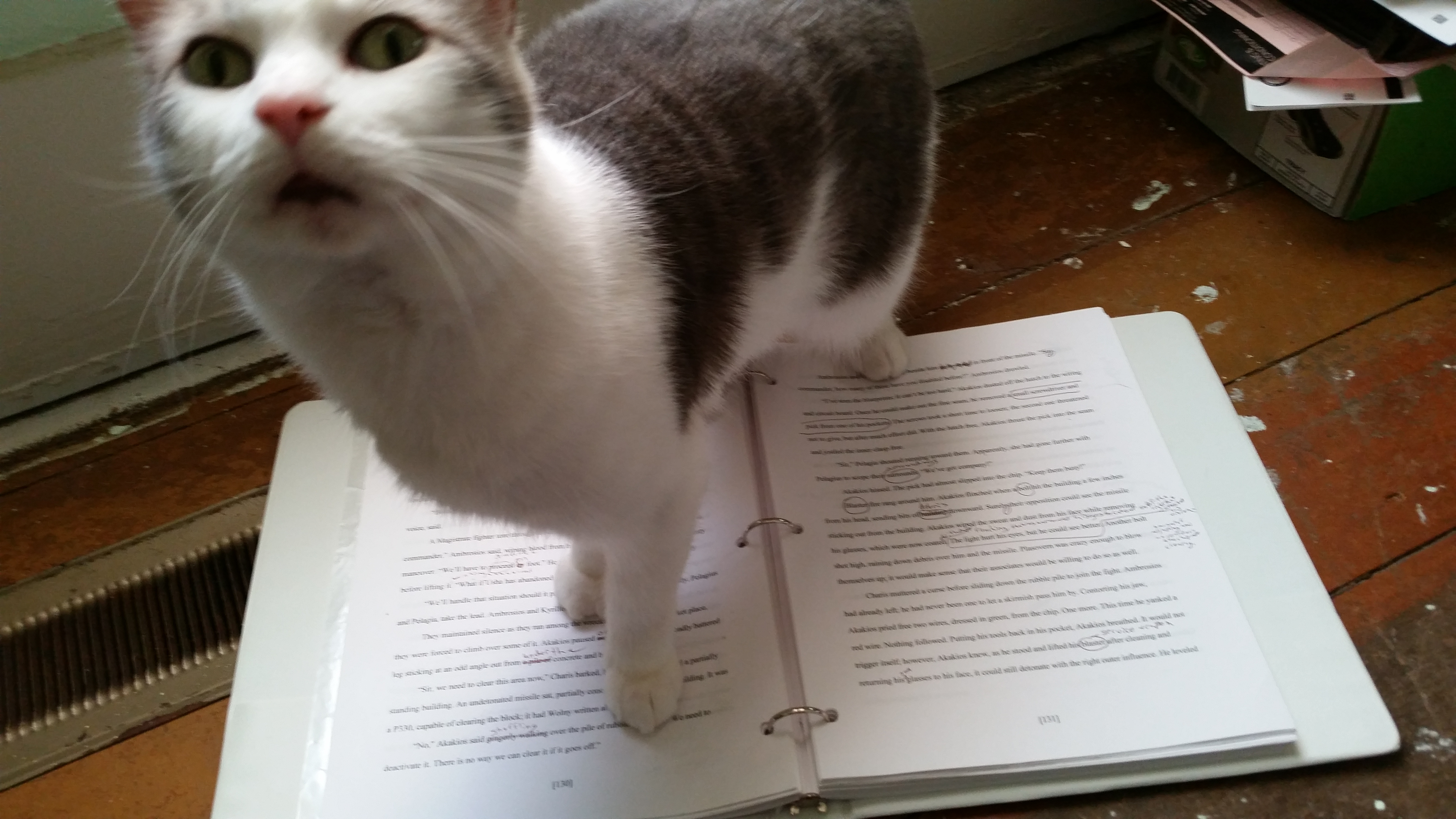
I’ve buckled down the hatches and have really been polishing up my SciFi manuscript. My printout revisions are complete, my rewrite of chapter one is done, and now all that remains to be done is implementing the printout edits into the electronic master copy. At this rate, I’ll be on schedule to finish and submit by the end of May/early June.
So far, the working title is “Heritage Lost,” and at this moment, it looks like that title will stick through to the submission process. I have to say I am relieved. To date, this project has been perhaps my most challenging. It was my first foray into SciFi; I started it after coming off my longtime fantasy series, meaning the characters were strangers to me; and did I say it was my first time writing science fiction! SciFi is hard. I don’t think enough people appreciate all the hard work writers of the genre put in to their pieces in order to create good science fiction.
Now don’t get me wrong, my novel is no where close to being hard SF (I admire writers who can pull off that category), but I still had to put in several hours to create believable planets, species, politics, cultures, technology, etc. that would not go beyond my readers’ suspension of disbelief. And believability is something I hope I’ve achieved, though I will always second guess myself on that.
No, “Heritage Lost” finds itself squarely in the the soft SF category, focusing on societal issues and characters. Of the subgenres, it probably best fits social science fiction and feminist science fiction. It addresses some challenging topics, particularly loss of cultural identity, expansionism, war, terrorism, radicalization, and gender issues — particularly as the series progresses. They are topics I hope I handle well and with the gravity they deserve. One of my main aims when tackling them is to do so in terms that nothing is black and white. People make varying decisions for varying reasons: One person’s wrong is another person’s right.
“Heritage Lost,” as its title hints, deals more with the loss of cultural, even personal, identity than the other themes, which grow as the series progresses. The main character’s personal and cultural identity is a mystery to her, lost in a war she’s too young to remember. Her lack of a past, which she’s ignored for a long time, is dredged up after she rescues a toddler who now finds himself in a similar situation. Along the way, she finds herself losing another identity, her home, her career, and her future.
I’m very hopeful this novel will be able to break into the publishing world, but I realize luck and timing will have to be on my side. I plan to try the traditional route, but I am also intrigued by the indie approach. Stories of success, like “Wool,” make self-publishing seem very tantalizing. “Wool,” for those unfamiliar with it, started as a standalone short story written by Hugh Howey, who later expanded the premise into a series. It became widely popular and was eventually picked up by Simon & Schuster while its movie rights were purchased by 20th Century Fox. And topping it off, Howey still retains full rights to his work, meaning he can still distribute it online. Who wouldn’t want to maintain rights and creative direction of their book?!
Creative freedom and maintaining full rights is very appealing, and I think that would be my main reason for choosing self-publishing, if I go that route. However, I have eight potential leads for the traditional method. First I’m going to submit the book to one of the biggest publishers of the genre. I probably have a snowflakes chance in hell of being accepted there, but I figure shoot high. My list also contains some smaller presses, too.
I don’t know how many I will query, especially since the draw of self-publishing is growing. But I figure, take one step at a time: It will all work out in the end.
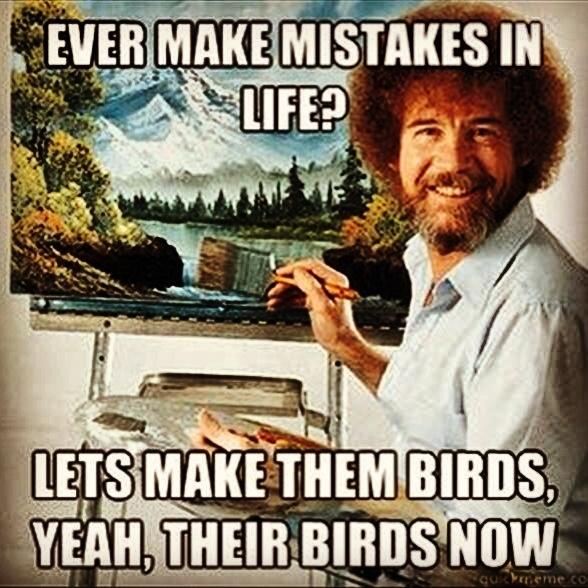
Rewrites are just taking the imperfect and making them into beautiful birds.
Rewrites have a negative connotation in the writing world, and when listening to some writers talk about them, you’d suspect they were on par with a root canal! I’m well up to my head in revisions for my SciFi novel right now, but you won’t catch me griping about them. Revisions and rewrites are just a natural part of the writing process. They are only as bad as you make them.
That is why I encourage fellow writers to rethink rewrites: They are your friends! Part of my equanimity toward rewrites comes from the fact that I had to literally rewrite most of my fantasy novel. I had made all my revisions, polished it up, and then BAM! My flashdrive died taking all my hard work with it. After that, rewriting small sections or even chapters is nothing. One of the things that got me through that crisis was this thought: It will be better than it was.
“It will be better than it was” should be every writer’s mantra when facing revisions and rewrites. No first draft is ever perfect. Mine are laden with spelling errors, incomplete thoughts where my fingers jumped ahead along with my brain, redundancies, repeated sentence structures, and other general errors. I type fast, and when doing that, there are going to be errors. That is OK! That is what the writing process is all about: getting words on page. And conversely the editing process is about polishing your story, catching errors, expanding on themes that you started to explore but didn’t fully give them their due, and so much more.
However, writers need to be honest with themselves when approaching revisions and rewrites. They have to accept their baby is imperfect, that sometimes they have to kill their darlings. This can be tough for some writers, particularly those new to craft. So instead of imagining yourself as a murderer, picture yourself as a momma bird; sometimes, you just have to push your babies out of the nest in order to ensure their survival and ability to thrive in a cruel world. You don’t want your book wallowing in its own filth: You want it to soar.
Perhaps, the best way to achieve that goal is to bring in an editor and beta readers. They can root out issues with a manuscript, which in turn can spark rewrites. For instance, I will be performing a partial rewrite on my first chapter. When three beta readers (one of which is a professional editor) say it’s slow, it is slow and needs addressed. Heck, when I went through my printout, I knew they were right. There are other areas that I will be addressing, too, many of which I knew were problem even before I sent out the manuscript to my beta readers; however, I knew they would offer suggestions that would get my brain fluids going and provide me with a new viewpoint: the viewpoint of a reader.
Beta readers and editors have a tendency of opening our eyes to aspects of a work that don’t work while also providing valuable insight into possible fixes or alternative directions. Without a doubt, they are valuable tools in the revision process; however, some writers take things too far and do everything beta readers say to an extreme.
To those writers, I provided these sagely words: Take all advice with a pinch of salt. Not all advice or critique will be something you want to implement into your final draft. With that said, take all critique, the good and the bad, courteously. Then, when it comes to final revisions, consider whether certain advice works with the story you are trying to tell.
The main key to rethinking revisions remains the need to switch your mindset. Editing and rewrites can be fun! They allow you to tweak or play with sections of your novel — to try something new. I will be playing with one of my later fight scenes in my SciFi novel. While rereading it via printout, it struck me as being flat, especially compared to another fight/flight scene earlier in the novel. I hope to try out several different changes in the scene to hopefully make it more exciting and suspenseful. It truly will be fun, not painful — and that is all about mindset. I know when I’m done it — not just the scene, but the novel — will be better.
So rather than focusing on the present and all the effort, which can be daunting, involved in revisions, focus on the outcome: a piece that tells a good story, is actually enjoyable for the reader, showcases your talent, and possibly gets you noticed by a publisher.




 Blood & Ink