Everyone is afraid of something — heck, even Indiana Jones is. And you know what? That only makes us human. We all know what it is like to be afraid, whether it’s snakes, heights, confined spaces, fire, death, rodents, flying, aliens, dogs, drowning, etc. I personally have an almost debilitating fear of heights; I get to a certain point and my body starts shutting down any further steps up. Purdue’s Hicks Undergraduate Library was a personal hell with its stairs allowing me to see the ground below me, but for four years I was able to survive climbing up and down them by not looking down and grabbing onto the railing nearest the wall — and staying close to this beacon of stability until safely outside that underground library.
Monk is a character synonymous with phobia since he is practically afraid of everything to the point his fears affect his quality of life. Does your own character’s fear gravitate toward being a phobia?
Look at yourself. What are your fears? How do they affect your daily life? Now pause and reflect on your answers to those two questions. By considering your own fears and even those of friends and family members, you will be better equipped to shape a character’s fears and possible phobias, because your character has to have them, unless they are completely alien. Why is it so important for characters to have fear? Because it can really connect your readers to a character due to fear’s universal nature.Continue reading “Character Series: Fears and Phobias”
Often times as we write our stories, we seldom consider what the cost of seeing them to print can be. Currently, one of the books I’m reading (will post a full review very soon) states in its “Publish Thy Self” section that in an ultimate worse-case scenario an self-published author can end up with $20,000 worth of debt on their credit card and a basement filled with unsold books. Of course, this is definitely not the fate of every indie author, because with good common sense practices, you don’t have to go deep into debt to see your dreams come true.
My good friend, Kylie Betzner, outlines some of the costs indie writers face. It truly is eye-opening.
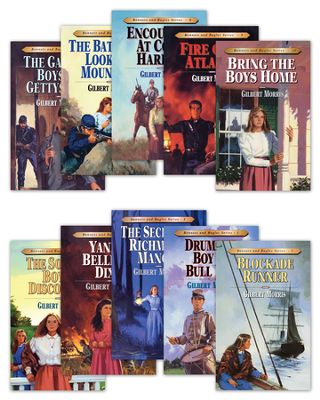
The series that started me down the path to becoming a writer.
Origin stories aren’t just for comic book heroes: Every writer has one, whether it all started with that one book/author, person in your life, or experience. Recently on Twitter, a person a I follow asked writers what book really inspired them to write. For me, my answer came to be instantly: Gilbert Morris books, particularly his Bonnets and Bugles series.
I tore through all the books in this series while I was in fifth or sixth grade, and immediately got the itch to write books, in addition to developing an interest in Civil War history and history in general. Of course, this wasn’t the first time I had an interest in writing since my mom did took me to two Young Authors Conferences, but these books really fanned the flames to write chapter novels and made me serious about pursuing writing as a career.
Since it was a series, I learned a lot while reading all ten of them: characterization, plotting over the course of a series, action, and more. The Bonnets and Bugles series was not perfect — but then again, is there such a thing as a perfection? — but that didn’t detract too much from my enjoyment of the story as a whole. I do believe that my reading of this young adult series was the first time I practiced real critical thinking from the perspective of a writer by dissecting what worked and what didn’t.
One thing I learned is that I wanted continuity in a series, I didn’t want to forget character development and send a character back to square one like Gilbert Morris did with Tom. While I agree that Tom would have struggled with his injury, all the development he had in “The Battle of Lookout Mountain” just seemed to evaporate in following books without any real reason given for such a major setback. Now continuity is something I’m particularly observant of when I’m writing a series.
From there I went on to read several of Gilbert Morris’ other series and enjoyed them greatly, though the more I read, the more I became aware of his love of repetition, which led characters to blur between books because many were the same, just having different names slapped on them. But when you’ve written over 50 books, I imagine that will happen.
I will admit my first serious efforts at writing novels owed too much to Morris and his Bonnets and Bugles and The House of Winslow series, but it offered a valuable learning experience and had me reading a slew of fiction and nonfiction books as I fully delved into historical fiction. However, I stepped away from writing historical fiction (I do hope to return to it one day), because I found myself nitpicking my work way too much; everything had to occur in my book as it did in history, even done to the second. Fortunately, I was given a solution — a chance to create my own history while still drawing inspiration from the history I love — when my brother introduced me to “Lord of the Rings” and the fantasy genre.
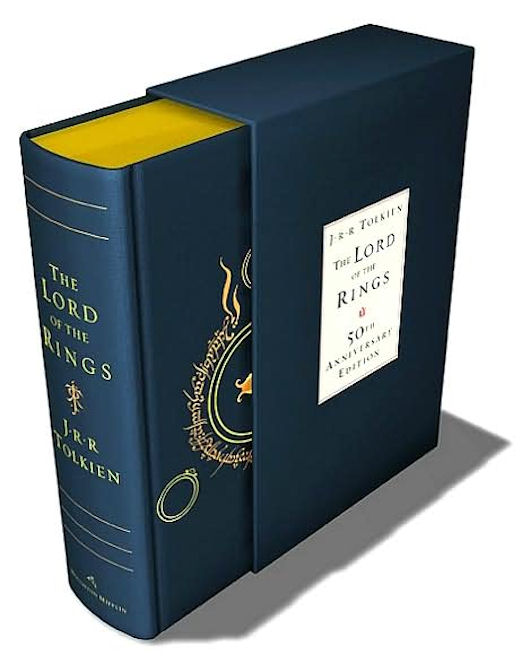
My introduction to the fantasy genre.
After Morris, J.R.R. Tolkien’s books are perhaps the most influential to my writing (at least in sequential order of when read I read them), because they introduced me to my chosen genre. Once again, I learned from Tolkien’s writings, and they also led the way to other fantasy books from Terry Pratchett to E.E. Knight to J.K. Rowling to Anne McCaffrey (then again, she’s considered science fiction, another genre of interest for me) and more.
While reading “Lord the Rings,” I loved the scale, the realness of the world — Tolkien’s world-building skills are truly to be envied — and the plot for the most part (even though How It Should Have Ended is correct the eagles could have solved all the problems). The characters were another draw for me though at times I wished the narrative were closer to some of them, which is perhaps why I’ve selected to write the bulk of my stories in a close third person POV. Another impact was my desire to move past the black and white/good versus pure evil type of conflict, though that might have been because I was reading “To Reign in Hell” by Steven Brust, where even ol’ Lucifer is portrayed in a sympathetic light, around the same time.
I don’t doubt for a second that my path as a writer has been affected by several other authors, but not on the scale that Gilbert Morris, who got me really started on wanting to write novels, and J.R.R. Tolkien, who sparked a love of the fantasy genre, probably most impacted that path.
What about you? Was there a book that really started you on the path to becoming a writer? Have there been others that have affected your path in a particularly strong way? Share them in the comments, or write your own blog post about your origin story as a writer and share a link in my comment section; if I receive any links to origin stories, I will feature them in a separate blog post on my site.
Dialogue tags play a vital rule in fiction. They provide clarity to readers about who is speaking. Of course, not every quote requires a dialogue tag, but it should be a rule of thumb that where there is the potential for confusion, a tag should be placed.
So what is a dialogue tag? They are words that we take often for granted as readers. Words like said, says, hissed, shouted, blurted, barked, joked, screamed and many, many more that either proceed or follow a noun. Different tags relay different information in regards to how a character says a certain line. However, writers should be weary about breaking out the thesaurus and trying to fit as many into a writing project as possible, because it comes off as amateurish.
You see readers have progressed to barely registering the word “said.” It just cues them into who is speaking, but the word itself is barely a blimp on their radar. If you throw in a ton of other dialogue tags that are not said (like whispered), you are giving the reader little stumbling blocks. And if you overuse those dialogue tags, your readers are going to start laughing — just look at the “Twilight,” “Eragon” or “Fifty Shades” fandoms where some fans have really heckled the writers’ overuse of certain dialogue tags.
Now that doesn’t mean you shouldn’t use alternative dialogue tags; it just means use them sparsely and with purpose. Now you might say, but I really need to use this one tag to convey fully what it is going on in this scene. That may be the case — and if it is, more power to you — but it might also be that you are taking the easy way out and relying on showing rather than telling. You need to trust your readers.Continue reading “Who Said What: Dialogue Tags and Properly Punctuating Them”
Diversity is the spice of life and has brought humanity several great things from tasty foods, fun festivals and a variety of sports to different arts and music. However, diversity can serve as a double-edged sword, resulting in conflicts, because — let’s face — it humans often have a fear of “otherness.” Whether that “otherness” is another race, culture, sex or sex orientation, sometimes it brings out the worse in other people, which is sad to see.
No matter what diversity is being used to describe — race, culture, sex or sexual orientation — it has become a buzzword in today’s world. Movies and books might very well find themselves criticized for not having enough diversity. Perhaps fearing this criticism, diversity is introduced just for its sake in a variety of creative projects, including in the adaptations of books — where not much diversity could be found — to the big or small screen. Diversity is something that is almost being pressed on writers nowadays.
Now don’t take me the wrong way, diversity is a good thing; however, writers should not feel forced to tackle this topic or even address it unless their works call for it and they as a writer feel confident to enter those waters. With that said, diversity can add flavor into a book or a completely crafted world in a work of speculative fiction. Particularly in a completely crafted world, diversity should appear in whatever form a writer chooses because it adds realism to a piece, even if that diversity is only briefly featured.
This entry will be largely geared toward those speculative fiction writers; however, writers in other writing disciplines might find some helpful seeds to take away and plant in their own works.Continue reading “World-building Series: Diversity”
Never burn down your bridges, Pappy used to say that. Well, I didn’t burn them down per se, just lit a few kegs of gunpowder under them. Turning in the saddle, I catch the billows of orange flame engulfing wooden frame buildings. The fire probably would spread, all that dry prairie grass. I brush my fingers against the locket grasped tightly in hand, jaw tightening with the action. Collateral damage for sure, but some sins can’t go unpunished, just like some wrongs can never be forgiven. My grip tightens on the locket, its florid ornamentation cutting into my skin. The metal is already stained red, inside and out.
Emitting a low whistle, I shift in the saddle. The smoke raises far into the sky, visible along with the glow against the darkness of night. They would see it in from town. No going back there; no, it being under the thumb of the Brownlow family–they wouldn’t forgive this. I spit off to the side while I brush my hand against the spot where Tom Brownlow had unloaded a slug. God, why couldn’t it have gone lower? Would have been the death of me, but better me to have been the one. I grimace and pull the hand away. The bandages were somewhat moist, but there was no time; I sure as heck don’t have a hankering for a quick drop and a short rope.
I face back to the west. No jury would convict me; heck, some people might even give me a star and a decent wage. Maybe that’s what I’ll do when I make it to Oregon. I flip open the locket; the photograph that had cost a pretty dollar brought forth something of a cross between a moan and sob. To the onlooker, it was ruined, stained with blood, which had dried and already showed signs browning. I press my lips together as they began to pucker and contort. As long as I can see her eyes still just as sharp as her wit, not–not as they were, the photograph would hold value.
I should stay and continue to pull out the venomous weed known as the house of Brownlow. My breaths grow ragged, and I lean forward in hopes of calming them, my head eventually resting against the mane of my gelding. Retribution… that’s what it would be. A series of hiccups shake my frame. No, it’s what I’ve done. I look back at the flames before meeting her eyes, so full of life. It would devour me, but it wouldn’t bring that spark back, never would bring it back.
I nudge the gelding forward. “Goin’ West,” I say aloud while I touch a strand of brown hair secured to the locket. “Don’t worry, Molly, we’ll go together…” A lump causes my voice to falter, leading me to close the locket before the waterworks can begin. “Just like we said we would.” Heck, Molly, I might even get that star, just for you.
Words: 499
For this Tipsy Lit Prompted challenge, I opted to take a major set out of my comfort zone and write in first person. This is, I believe, only the second time post-college that I have wrote in first person as it is not my favorite approach. Additionally, I decide I explore the Western genre, which I’m kind of a sucker for, even if that love is not regularly shown compared to my love for speculative fiction.
This week’s challenge, for the curious, was to write a short story — 500 words or less — about endings and beginnings.
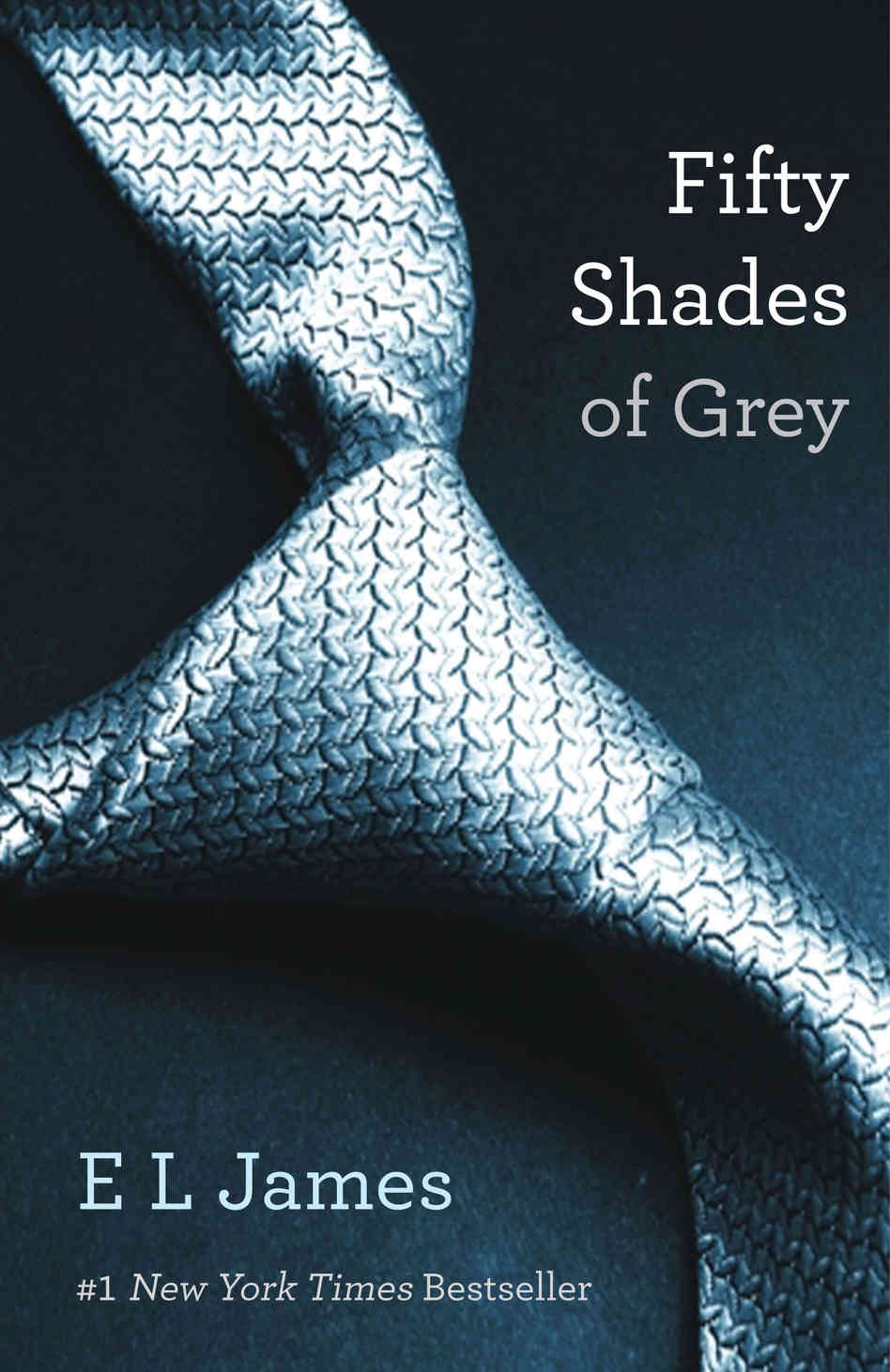
Well, at least never read it straight through, because I have to admit to having read exerts — often aloud. What can I say? I like sharing bad aloud, and the great thing about “Fifty Shades of Grey” is I can flip to any page and get bad. Now if I were clever, I would have titled this piece “Fifty Shades of No” and provided 50 reasons, but to be honest that would have ended with me quoting 50 horrible passages from the book, which speaks volumes toward one of my main reasons for not wanting to read this book or its sequels: It’s just so poorly written! I can shut off the editor portion of brain to a point, but not enough to make it through this book seriously.
I’m not trying to belittle people who have read and enjoyed “Fifty Shades of Grey,” because, admit it or not, we all have our guilty pleasures and we should feel no shame for having them. So on that note, here are my five reasons for why I’ll never curl up with “Fifty Shades of Grey.”Continue reading “Five reasons I’ll never read ‘Fifty Shades of Grey’”
Just because you have two or more adjectives before a noun doesn’t necessarily mean you need to place a comma between each one. This is one of my biggest pet peeves as a copyeditor, right up there with hyphens attaching a -ly adjective to another adjective (ex. publicly-owned building should be publicly owned building) or two spaces after a period. And here recently, I’m seeing more of it. I can understand why. It becomes almost a second nature to pop in a comma between those adjectives; however, you must resist that urge!
Commas are only placed between two or more coordinate adjectives that modify the same noun. Examples of this are highlighted below:
Betsy is an obedient, loyal dog. (Both obedient and loyal are used to describe the noun, dog.)
Prepare for a hot, humid day. (Hot and humid both describe the day.)
He paused in his cruel, callous actions to cackle. (In this instance, cruel and callous describe the type of actions occurring.)
Now the following sentences also have two adjectives in front of a noun, however, they do not receive a comma:
The old brick house loomed in the distance.
Her thin cotton dress displayed some fraying at the bottom.
The red metal roof gleamed.
In all instances above, the first adjective is modifying the following adjective and the noun as a whole.
Well, it seems easy enough, but how do you know if you are doing it right? The approach I had been taught was to substitute “and” between the adjectives. For example, “Betsy is an obedient and loyal dog.” The sentence makes sense with the addition of the “and.” However, try doing that with one of the latter three options. “The old and brick house loomed in the distance.” Now that does not sound good at all, does it? Or how about “The red and metal roof gleamed.” That also doesn’t sound quite right.
If the “and” approach doesn’t work for you, one of my friends had found another method that works for her: switching up the adjectives’ positions. For example, “Prepare for a humid, hot day.” The adjectives in this alternative positioning still make sense. Now let’s try this same approach with one of the sentences that doesn’t utilize a comma: “Her cotton thin dress displayed some fraying at the bottom.” This makes very little sense.
Hey everybody, polling has begun for this week’s prompted challenge on TipsyLit. Vote for me or any of the other writers, just take time to read the entries and support a fellow writer!



 Blood & Ink