You know what’s fun? Euphemisms

“Where’s Ol’Daisy, Joe Bob?” asked Bobby Ray upon entering the milking parlor.
“She kicked her last bucket.” Joe Bob continued to squirt milk into the milk pan as he sat next to Ol’Trixie.
“EH?”
“You know, she exited the barn for the last time… is eating in a greener pasture on a farm upstate.”
 

Euphemisms are a lot fun and tackle a wide variety of topics from hangovers and sex to death and even visiting the toilet — topics that are not always socially acceptable or are sensitive in nature. Euphemism usually take three forms (though there are hybrids): phonetic modification, e.g., “frak” from the original Battlestar Galactica, which was used to escape the late-70s censors, “oh my gosh,” “h.e. double hockey sticks,” etc.; figures of speech, e.g., “passed away,” “riding the crimson pony,” etc.; and finally, slang, e.g., “couch potato” instead of calling someone lazy or “waste (them)” meaning to kill them.

I have a character who is quite fond of euphemisms or old sayings, many of which are cliche, but I keep them because it is just his character: He is purposely grabbing the cliches, mainly because those are the tidbits of euphemisms he has heard. Why? Because time after time real people turn to the cliche in everyday conversation. Other characters, however, are a bit more creative with their euphemisms and slang. And it is good to have that variety of old vs. new.

Let’s face it euphemisms offer an endless variety that can add flavor to a manuscript or character, especially when you consider that each culture, from countries to different military branches, each have their own sayings and slang. In some cases, particularly the military example, it can bring added realism. Euphemisms can can be humorous, they can be endearing: The possibilities are endless really. Just like they are not limited to certain writing situations or genres.

Historical fiction has some perks as there are a lot of colorful slang and euphemism roaming through the curtains of history; you merely have to pick a time period and start digging. Did you know basket-making has a very different meaning in 19th century England vocabulary? Or that in China “the bitten peach” or “the passion of the cut sleeve” were both terms referring to homosexuality?

SciFi and fantasy writers can have bonus fun with euphemisms and slang because they can make their own to reflect the cultures and societies that live in their worlds; however, they have to be careful because the euphemisms still has to be translatable to their readers … of course, this can often be managed by providing context.

And of course with all things, use slang and euphemisms in moderation and with purpose!

Want to explore more euphemisms? Visit these links:

And of course there is this fun skit from Robot Chicken, which uses several euphemisms (WARNING: Some swearing and violence, albeit cartoon violence):

http://www.youtube.com/watch?v=tcOV68Gx1YU

Partial Review: Attempting to use Evernote

evernote_ipad_wallpaper
So what do you have to offer me Evernote?

I had downloaded Evernote several months ago, but had never really messed around with it until this week. So far, I’m seeing a lot of potential for this program and its nifty Firefox add-on — I have yet to use the Android app — as a writer. I’ve set up separate notebooks for each of my current novel projects, and for my SciFi project, I’ve created notes that keep track of my cast of characters and their bios. I have also created a note with each setting/place that my characters stop at, which is a huge help due to some of the locations having strange names. Additionally, there are a lot of locations, some just mentioned by the characters, and they all need to be tracked.

I can see endless time savings with the Evernote Web Clipper internet Web browser add-on for writers of all genres, but perhaps more particularly for those who focus on historical fictional. While researching on the internet, all you have to do is click the little elephant icon — get it, elephants never forget, cha! — and it instantly saves the page to your notes, while giving you the option of which notebook to put it in and which tags you would like to use.

Evernote also uses tags, meaning you can attach tags to each note. Tags I have used so far include characters, settings, places. I assume as my number of notes begin to grow these tags will prove to be life and time savers.

Once I play more with Evernote, I will post more of my thoughts and opinion on this software, plus eventually the Android app.

Do you use Evernote? What are your favorite features or tips for a person, particularly a writer, just starting out with the program.

Stay calm and query on — Wrapping up September

Is September really almost over? It’s hard to believe that October is just around the corner, especially since for me it feels like September just got started. I have to say this month has been wonderful for my writing. Not only have I begun to query “Passage” (which is quite stressful!) to various agents, but I’ve managed to complete a short story I’ve been working on for quite sometime and get work done on a SciFi novel I’ve also been trying to complete.

Perhaps, my greatest rallying cry this month came in the form of a blog post that my brother emailed to me, entitled How to be a Professional Writer by Correia45 (plus its predecessor). Being a writer is my job, but after reading these blog posts, I realized I was treating my fictional work more as a hobby. I would go in spurts where I would write, followed by prolonged periods of procrastination; I had lost the drive and good practices that burned in me throughout high school and college, and had allowed external factors to hamper me. But now, I see the errors of my ways, and since reading those blog posts, I have been working on my writing or others every night, minus one day off, treating it like it should be: like job.

One of my writing friends had made a really good point when I met her at a coffee shop: I can dedicate so much time to writing during NaNoWriMo, so I should be able to do that during the rest of year. And she is right. Dedication to the craft should spread out throughout the year — writers should dedicate the same amount of time to writing as they do during NaNoWriMo; at least, if they are dedicated writers, who seriously want to make a career out of writing. And I have to face it: NaNoWriMos are not helping me.

I have not felt the NaNoWriMo drive for quite some time — not since that first event and the following JulNoWriMo. Nowadays, more often than not, I find NaNoWriMo time disheartening and frustrating, though this year might be different since I now know people who NaNo locally, and we can get together. It is always nice to belong to something and surround oneself with fellows who are striving to achieve the same goal. But largely, for the rest of the year and into 2014 and beyond, I’m going to focus on the larger pictures, not on a monthly binge; no, it will be a year-round binge.

And oh, what a year-round binge it will be! Short stories, novels, novellas and so on — they will all fill out my year, along with the writing that is sent to me for proofing, which I’ve been getting quite a bit of lately to my pleasure. And as I get others work, I am pressured toward biting the bullet and finally purchasing the Chicago Manual of Style (though it is so expensive!) because sometimes I just need “the source,” especially as AP Style conflicts in my head with other styles.

All and all, October is set up to be a promising month. Just have to keep up the momentum, keep time open for writing or editing and continue to view my writing projects as a job.

*** In other news, September added to my list of things I never expect when I came to work at the local paper. All on the same day, I got into a pasture with a full-grown bull and then got to see a calf born. Pretty awesome day, all in all. ***

Prompted: Should be Banned

This is a very good writing prompt. Often times when I write, I find myself wondering how some of the characters, themes, or topics will be received, particularly by some of my family members. But with a prompt like this, you just go for it; you tackle those topics that will have some complaints because you have the free reign to do so. I highly recommend taking that leap and just going for it — I’m sure you will find it liberating. It might even give you the courage to take risks and tackle your stories the way you envision them without the fear of any backlash. Let’s face it as writers we will always face backlash, because we can’t win them all.

Feeling naughty? Read a banned book

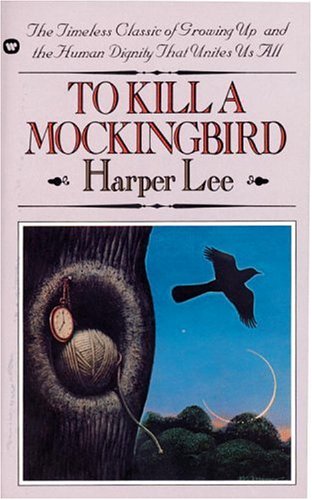
mockingbird
One of my all-time favorites

Across the U.S., libraries have been gearing up for Banned Books Week, which was started by the American Library Association. The week promotes intellectual freedom and the right for individuals to express thoughts that might be unorthodox or unpopular — and for readers to be able to read those thoughts. This year’s Banned Book Week starts today and runs until Sept. 28,

Books get challenged or banned for different reasons; from religious reasons to being considered sexually provocative or violent, there truly is a wide gamut of reasons individuals try to remove books from libraries, particularly citing the access children have to these books. According to the ALA website, 5,099 books were challenged from 2000-2009. Of those challenge books, the break down is visible below:

  • 1,577 challenges due to “sexually explicit” material;
  • 1,291 challenges due to “offensive language”;
  • 989 challenges due to materials deemed “unsuited to age group”;
  • 619 challenged due to “violence”‘ and
  • 361 challenges due to “homosexuality.”

Some of my all-time favorite books are challenged or have been so in the past, and include “The Harry Potter” series, “Of Mice and Men,” “Grapes of Wrath,” “To Kill a Mockingbird” and many more. So it makes me exceedingly happy to be able to access these books: as it should make you as well. So this week stop by your local library and check out a banned or challenged book and revel in being able to do so. Or perhaps, relive one of your favorite banned books, particularly if it is one that you remember from your adolescence. Show challengers that they cannot ban or censor what you choose to read.

So what is your favorite(s) banned book? Share them below in the comment section!

Characters, touchy subjects and framing

What is a woman's role in war? Depends who you talk to, even amongst characters.
What is a woman’s role in war? Depends who you talk to, even amongst characters.

While going through the revision portion of my novel, one of my readers expressed dislike for a statement made by one of my character. The character is a woman who mused aloud, something to the extent, that she could not imagine being a soldier. I personally have nothing against women as soldiers as long as they have the skills to fulfill their duties and the passion for it — however, this particular character has different views than mine, because lets face it, everyone is going to have different views —  even our characters.

This female character of mine is not overly feminist, though she could possibly be labeled a pre-first wave feminist. She lives in a male-dominated world that is similar to mid-1700s France, but believes women should be able operate businesses, have an education, inherit wealth and property, and have the freedom to marry as they please. In the current timeline, these ideals are slowly growing less controversial but other cultural beliefs about a woman’s place hold firm, such as the notion that women stay at home while the men go to war, and this particular woman is not about to go against all cultural norms.

Even so, I still consider her a largely strong female character. She stands her ground when it comes to marriage, especially since most women of her age and status would have been married off by now. She keeps her back straight even though she is the center of gossip with her single status. She is also well educated and eventually will serve as a diplomat, a rare position for a woman. But even so, she is a product of her culture and her statement is not kosher to modern women. And you know what? That is OK.

Characters can express opinions that could make you blush with how inappropriate, biased, bigoted, racist, etc. they are. And that is fine. There are people with all sorts of beliefs/opinions, right or wrong. What matters is how you frame these characters or touchy subjects. Framing is everything. Are the character’s actions, statements, or thoughts framed as being right or wrong? You need to be constantly aware of how your characters are framed.

In my case, I have other women characters with varying thoughts on the war and women’s role in it. A few even get to fight in it. And that is one way that you can counteract unkosher beliefs for modern readers: offer a variety of viewpoints/beliefs from different characters. Also know that none of these differing viewpoints have to be overly radical for their time periods to the point that they are unbelievable. My suggestion is to research existing, real life “radicals” of different time periods. Not only will you learn a lot but you will gain an appreciation for the forerunners of several modern movements who were truly ahead of their time.

Good example
Good example of imperfect characters who behaviors are not cast in a good light.

And other important framing tool is the story itself. Show over the course of your tale the errors of the character’s way of thinking, even if in the end, the character learns nothing or holds firm to their beliefs — let’s face it, even in real life, you can’t win them all. “The Great Gatsby” is a pretty good example of this. You have the narrator/observer, who is sharing the events around him, and quite the assembly of characters, some of which are pretty petty, vain, racist, and sexist. Yet through the course of the story and Nick’s POV, we know we are not supposed to like these characters or their behaviors.

I am sure there are other methods that writers find helpful for putting their characters in context or checking their “ways” that lack political correctness in order to not promote them. Don’t shy away from characters that are not politically correct, but as a writer, know how you want to frame them to properly showcase what your own beliefs are. But note that you can’t please everyone, some of you readers won’t read between the lines, and some of your readers won’t agree with your own personal leanings — it’s just how the world works.

Looks and gazes = lazy

“Looked” and “gazed” are writer cop-outs and amount to telling. In this article, I’m not going to tell you to drop them completely from your short story or manuscript — since I’m a proponent of all things in moderation — but to encourage writers to consider alternatives, especially since those alternate options often bring a richer tone and exposition to your writing.

I used to be a big culprit of using look and gazed in my writing pre-college, and even today from time to time, I find myself sneaking back into the over-use of the words. The error of my ways — as it were — was pointed out to me by one of my college professors who was of the mind that the use of “look,” in particular, was the sign of an amateur writer. For the most part, she is right.

Who would want: “He looked out into the expansive collection of doodads” when they could have something more — something better. “Cranks, gears and little unworldly gadgets surrounded him by the piles. They towered over him — beckoned to him. Some caught light from the ceiling luminaries, which dimly lit room.”

Rather than turn to the the tired “look” why not explore the environment around your character, so the reader is discovering it along with them. By delving into the character’s surroundings, the writer can only pull in the readers further into the story. When approaching a scene where you are tempted to use “look” or “gaze,” stop. Consider how else you can approach the scene. What is surrounding the character(s)? Don’t underestimate characters interacting with their surroundings as a method to set a scene and avoid the tired “look.”

With all this said, “look” is not an evil word, but should be avoided when there are other options available. So keep that in mind as you write. If you already have a finished story, use the search feature to hunt down “looks” and “gazes” to see if there are scenes that can be done better without the telling.

Happy writing!

Writing Prompt #6: Write a character’s obit

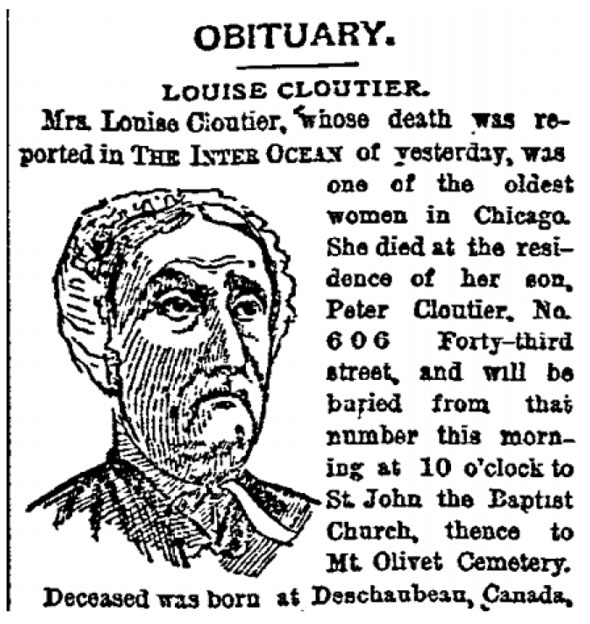
Louise-Cloutier-Obituary2
“Remember me as you pass by,
As you are now, so once was I,
As I am now, so you will be,
Prepare for death and follow me.”

Obituaries can say a lot about a person: who their parents were, who their relative are (plus if any have predeceased them), where they were born, who they married (if they did at all), where they worked, affiliations they had, hobbies they enjoyed, their religion, how they lived, and of course, where and how they died.

For this writing prompt, write a paid obit (a lengthy obit) for your character — you might be surprised by what you discover about your character.

What ya got against series?

harrypottersetbest
Sometimes a story takes more than one book; but tread carefully, for there are many pits to stumble into.

What always surprises me as lurk around different forums is the hate series seem to get from some individuals, particularly series that reach great success like Harry Potter. “The author is just milking the cash cow,” they will say, or “Don’t they have enough money.” What these individuals don’t understand is that writers don’t write series to increase their money intake — at least not in most cases. Writers write series because they have a story they want to tell and it is just not physically possible to tell it in one book.

I will admit in some cases series are expanded for profitability. The Twilight Series (I refuse to call it a saga because it just is not one) is a good example as it was expanded at the request of the publisher, and it shows in the later two books where nothing happens for prolonged periods of time because Stephenie Meyer had only originally planned for one book. And that is one of the challenges with series: They need to be planned out thoroughly. Lack of proper planning is perhaps one of the big reasons people roll their eyes at series.

Without proper planning, you can have subplots that don’t go anywhere or are forgotten over the course of a long series, character whiplash, and a hoard of other problems, which always glare off the page to discerning readers. Writers must always consider the end point when writing a series; properly plan/outline the novels; write out character changes/growth/or planned back slides and the reasoning behind them; write down subplots and how they are resolved; and more.

While J.K. Rowling stated she had planned out the entirety of the Harry Potter series, I seriously doubt it. Why do I say this? The sudden inclusion of the Deathly Hallows in book seven. There should have been lead up to these magical items prior to book six — and no the inclusion of the cloak of invisibility does not cut it because the concept of the Deathly Hallows was not mentioned beside it. This could have been corrected if the items were referenced in one of the earlier books; perhaps, Hermione could have noted them from one of her readings, etc. If this had been done, readers could have had an “AH!” moment, rather than be left to scratch their heads and wonder why Rowling pulled these items out of nowhere.

The other plus to properly planning out a series is you have a rough idea of how many books you need to tell your story, and it should help prevent you from having a book (or books) in the series that does nothing — that does not push the plot through to the end. This is a real danger when writing series and will only serve to frustrate readers who will grumble. It will also help prevent wandering series that might outlive you, e.g., The Wheel of Time series.

No doubt, even if a writer takes the time and follows through with their plans, there will still be gripers and that is something that will never change. Even so, writers should not shy away from writing series; after all, the most important thing is for the writer to get out their story with perfect execution, so the plot bunnies don’t drive them crazy.

Why I’m weary of Tauriel

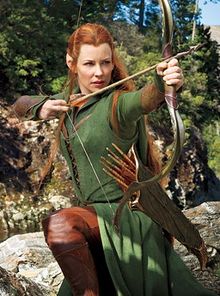
EvangelineLillyAsTauriel
Femme fatale? GIve me someone relatable.

I’m a major Tolkien fan, but not a strict purist. I was not crying or agonizing over every little change made in Peter Jackson’s adaptation of “The Lord of the Rings” and actually enjoyed some of the changes he incorporated into the films — including drawing from the appendices. Though I’m not quite as forgiving of changes in “The Hobbit,” which to this day I will say should not have been stretched into three films. Perhaps, the most glaring change will occur in the next film “The Desolation of Smaug,” namely the addition of an original character, Tauriel.

I understand why she was added: Let’s face it, there aren’t many women characters in “The Hobbit” movies, and if I remember correctly, there were none in the book (though it has been many moons since I read “The Hobbit”). But to have that be the only reason to include her can be as just as bad of the absence of women as it borders on tokenism. While I will reserve my judgement until I see the film, I am weary of this inclusion, particularly since at the moment Tauriel reeks of tokenism and the cliche. I also dread that she might feel like a Sue.

My first introduction to Tauriel was the action figure where it is stated on the box that she is “as beautiful as she is deadly.” Needless to say, it left a sour taste in my mouth. And the more I have learned about the character, the more uncertain I feel about her. She is young by elf standards, yet she is the captain of the guard. On top of that she also belongs to a lesser caste then the likes of Arwen, Galadriel, etc. She has a “significant” relationship with Legolas, and Thrandruil has a soft spot in his heart for her, plus there is a rumor of a romance with one of the dwarves. All these just make my skin crawl as I think “Mary Sue.”

By all means, add a female character, but make them more than a cliche, don’t place them just because you don’t want a sausage fest — and make them relatable! Also women character do not need to have a romance! I will never understand Hollywood’s need to throw in romance where it is not needed. I would rather go through a film with out a female character, then have to stomach the cliches of what a woman, in this case the femme fatale. But alas, I digress.

Here’s hoping that my initial wariness is misplaced and I walk away from the movie this December completely in love with the character.

What are your thoughts about this inclusion?