This is one of my favorite writing prompts as it transcends genres — after all, fires occur no matter the era — and tells so much about a characters and what they hold dear. Here is how it works:
Pick one of your characters. Now that character’s abode is on fire. What one item would they try to save?
I wrote a little scene with my character retrieving a priceless artifact from his residence, which was a relic of his life before his current situation. It was also a big relic, which required an extra set off hands that were pressed into duty.
What would your character save?
[Writer’s Note: Tomorrow will launch my character series if all goes as planned. The series will explore little details that make a character all the more “real” to the reader. The first post will include an introduction, in addition to how family makes a person who they are.]
Poor Faulkner. Does he really think big emotions come from big words? He thinks I don’t know the ten-dollar words. I know them all right. But there are older and simpler and better words, and those are the ones I use.
Yes, they are good resources, but writer’s need to practice discipline to know when not to use them.
Ernest Hemingway has a point often times an one-dollar word works far better than a ten-dollar word. While ten-dollar words have their place, often times, they just don’t hold the same power. They can break a moment as a reader has to pause and reach for a dictionary, or they just make the reader scratch their head, wondering about the word choice.
Words hold power to evoke powerful emotions in reader. I will admit to having wept at particularly moving lines — well-written lines. And when considering these lines that evoke strong emotion in me, they did not use ten-dollar words.
“Summer, and he watches his children’s heart break. Autumn again and Boo’s children needed him.” — “To Kill a Mockingbird” by Harper Lee.
These two lines have stuck with me ever since I read “To Kill a Mockingbird” in high school. Simple sentences, simple words, yet so much power. “Where the Red Fern Grows” is an other example for me personally where the simple evoked so many tears; I remember just bawling my eyes out when reading that book. There is much power in the simple; it transcends across the broad spectrum of the human condition — there is no extra accessory required to appreciate it’s meaning.
Dictionaries and thesauruses have their uses, and sometimes it is fun to try a new word; however, writers need to make sure they do not cross the line of abuse. There is nothing as eye-rolling, as cringe-worthy, as thesaurus abuse. What makes thesaurus abuse even worse is when a writer plugs in a ten-dollar word and then fails to grasp its meaning, often to the reader’s amusement.
Christopher Paolini is the writer that instantly springs to mind when I think of thesaurus abuse. Several passages (if I had one of the books, I would share a few examples) feel as if Paolini has pulled words from SAT preps and the thesaurus. It is particularly hilarious because of a photo accompanying an article The New York Times published back in January 2012; the photo showed Paolini’s desk with the “Super Thesaurus” on it. Of course, Paolini is not the only guilty writer; he just happens to be the first one that pops into my mind.
Writers who plug in ill-fitting ten-dollar words no doubt think they are so clever; however, they often don’t realize the disconnect they cause with their readers. This is not to say that ten-dollar words can’t be done properly since they can if used wisely and sparingly.
My overall point: Choose your words carefully, pick the right one whether it is one-dollar or ten-dollar, don’t snub one-dollar words as inferior, and be sure you know what your ten-dollar words mean and how to use them.
I have long been a fan of Dictionary.com, which I use over other sites when I’m in a pinch for a word or want to make sure I’ve picked the right one. So of course, when I got a smartphone (android), I had to download the Dictionary.com app. I must say it has come in handy after I started changing my writing locations — especially when I did not have wifi turned on.
The app, of course, comes with the dictionary component where users can search words. There is also the ability to switch over to the thesaurus both on the main screen and then later on word entries. Like on the main site, users have the ability to favorite words, in addition to viewing recently searched for words — very handy especially if you are forgetful like I can be.
It is also nice that they have included the “Daily” feature, which includes the Word of the Day, The Hot Word, Question of the Day and the Spanish Word of the Day. Personally, I love the Word of the Day. It is a great way to freshen up one’s vocabulary; however, it can be a double-edged sword, which I will explain in tomorrow’s entry.
Another way to check out words you might not have heard before is to hit the “Trends” button, where users will find trending words, popular words and the sort-of-creepy nearby searched words section. My favorite word so far from the latter section having been “sackbut,” a medieval form of the trombone, which was searched by someone in nearby Goshen. Nearby searched words certainly appeals to the nosy neighbor/stalker.
The app also offers the ability for users to earn mPoints for things like searching regularly, visiting the app, making thesaurus searches, downloading related apps, adding words to your favorites list, etc. Apparently by racking up points, users can earn giftcards, not that I’m too interested in that, because I’m caught on the notion that there has to be a catch. However, for those of you not as paranoid, it is quite easy to rack up points; so far, without even trying, I have amassed 200 points. Of course, when you go to claim said points, it bumps you to a page with a advertisement, giving you only the option to click the advert or visit the rewards store without the ability to go back and collect more points. So you get wrapped up into a tedious cycle of having to return to the opening screen, click mPoints, click again to collect more points and then bam — back to an advertisement.
However, for its main purpose, it makes a handy dictionary-on-the-go and is definitely worth the download, plus its free! Definitely a must-have for writers on the go.
The first step is realizing you have a problem… and then you procrastinate further while examining the problem — or by examing your pencil while never putting it to paper to, umm, write.
We all have them — and if you claim not to, you are lying — namely, writing sins. They are things you do that you know you shouldn’t do. Some writers might might actually have more than seven writing sins, but lets face it, seven is much more manageable — plus, there is the whole biblical seven sins… parallelism and all.
But I digress, for today, I’m sharing my seven deadly writing sins.
Procrastination: This is my absolute top writing sin. I will sit down and start typing or editing and then suddenly I’m on Facebook, Deviantart, a forum, Youtube, etc. On the flip-side, sometimes I will plan to start working on a project and then postpone it for one reason or another — and never a good one. To combat this, I started to exercise regularly, which has increased my energy levels and focus.
Redundancy: I can be a little redundant with my writing, and I have to practice constant vigilance. I will repeat facts and sentiments, continually reuse certain words, or write statements that are not really needed.
Too much telling: We all know the old adage: show don’t tell. However, sometimes it is alright to tell, just don’t do it too often since all things must be done in moderation. Sometimes, I cross that line… and catch my slips during revisions.
Self-doubt: We all have those moments when we think that ‘oh, it’s not that good,’ ‘I will never catch the eye of an agent/publisher,’ etc. I am not immune to this despite often having a decently sized ego. I just try to squish that annoying voice down where it is not so vocal and plod along on my merry way.
Wordiness: My sentences have a way of holding too many words (some nothing more than clutter). It is often true a few probably suffice and work better than the many. However, despite knowing my tendencies, I don’t worry so much about this writing sin while writing; instead, I save tackling it for edits.
Sentence Variation: This kind of ties in with my redundancy writing sin since I can be very redundant with sentence variation, favoring certain structures over others. This results in certain structures taking over the novel and leading to the realm of boring. This is another sin I fix in revisions.
That: This ties in with wordiness since often times the word “that” is unnecessary. I became aware of the cluttering nature of “that” when I started as a staff writer. I then proceeded to de-clutter my manuscript by removing unnecessary that’s. The key to finding these ‘clutterers’ is to read aloud a sentence both with and without “that.” If the sentence sounds good without “that,” delete it.
What are your seven deadly writing sins? Blog about them and include a link below.
World-building is an intricate part of crafting a story — if done properly, it provides believability and envelopes the reader, holding their interest while also making them want to delve deeper into the world you have crafted.
While world-building is often considered the realm of fantasy and scifi writers that is not the case. Writers from all disciplines need to know the “world” their characters inhabit. Cities and towns have different flavors, just like countries do, requiring research to achieve believability to know what is possible and what isn’t. While most fantasy and scifi writers get to start with a clean sheet, they, however, must have set rules for their world, which requires understanding of their world’s history, culture, social issues, etc., and why they exist as such.
This world-building series, which will be posted each Sunday, will highlight different aspects, and since I am a speculative fiction writer, it will be aimed toward that discipline but with any luck writers in other disciplines will also be able to take away helpful grains from my posts. Posts will be in no order of importance with the first one most likely tackling culture. Be sure to tune in.
Outlines can be your best friends, giving direction in an organized fashion!
Some use them, others don’t; however, outlines are often an important tool in any writer’s toolbox. Outlines, while they mostly relay story events in order, are not necessarily laid out the same way — let’s face it, every writer is different, thus their outlines will be different.
I will admit that when I start a project, I will rarely start with an outline — the main exception being if I am working on a sequel, where events are tied to a previous novel or shape a following novel in a series. I just start writing, letting the “plot bunny,” as it were, run free. One of my earlier novels, which I started in junior high, did not have an outline for the longest of times — then I got mid-way through and hit a brick wall. To get around that wall, I had to plot where the story was going, during which I created my first ever outline. With it’s help, I made it the rest of the way through.
You see, outlines provide a chance to organize your thoughts and provide direction for a project; they show where a story is going, including character growth and major events. Outlines can be crafted prior to starting a project or after one is already started, providing flexibility.
What Does An Outline Look Like?
There is no simple answer to this question since each writer will have their own preferences for appearance as far as how information is organized, whether bullets are used, etc.
For my projects, I normally outline by chapter, meaning I will put the chapter name and then write a summary of the events that will occur within it, highlighting particularly major events or character developments. On my Scifi project, which is still very rough and not fully outlined, I just did an outline on major events that have to occur at some point during the novel, and during this month, I hope to flesh out the “in-betweens” of what happens prior to and after these major occurrences.
Other writers may solely do bullets of events in chronological order rather break them up into chapters; it is all just a matter of preference.
Don’t Be A Slave To Your Outline
Sometimes outlines become obsolete: characters revolt, a new plot bunny trail emerges that is too irresistible or some other unforeseeable event emerges. In such cases, do not become a slave to your outline, put it aside and explore your story; after all, outlines are just guideposts, not set in stone. Ideas evolve, and you need only ask yourself: Does this improve my story or my characters? If the answer is yes, then by all means explore that avenue. If the answer is no, the side trail is probably just added padding that is not needed.
I have gutted whole portions of outlines because characters have changed or matured, or the plot has matured. In fact, I will be reorganizing the sequel to “Passage” because an event within “Passage” was changed during revisions; however, the change will create depth and more mature plot lines in the sequel, making it worth it.
Don’t be afraid to step off the path you envisioned, because often times, the path you did not foresee is better for your story — even if you have to get through the thorns of major rewrites.
Where did January go? It’s hard to believe that February has rolled in, particularly frigidly here in Indiana. Rather than flee south where it is warm, why not take your mind of the snow, ice and miserable cold by dedicating your month to another branch of writing: song writing.
With February comes February Album Writing Month, where songwriters are asked to write 14 songs in 28 days. The FAWN website offers many ways to get inspired from weekly challenges to daily tweets. The site also allows for collaboration through a message board where you can send out shout-outs for what you are looking for.
It is not an event I will be participating in myself, even though eventually I will need to write two songs for my book that have some relevance to characters (may they turn out alright), but I felt I should share this unique event for all the songwriters out there.
Personal Blogging Month
I have decided that February will be my blog posting month, where I will hopefully post something every day while also launching two weekly series: character building and world building. I will not be participating in the official NaBloPoMo, which I discovered carries a different theme each month with this month’s theme being “Love” & Sex” — not a topic that interests me too much, even though I could do tie-ins to writing love and sex, but I doubt I would have enough material for a month, so instead I will just remain focused on general writing.
Have any subjects you would like to read about? Shoot me a message in the comment section and I will do my best to tackle the topic! I welcome any suggestions just so I will hopefully have enough to make it 28 days.
Have you ever found yourself in a rut? One where the words just aren’t coming, and you are losing focus or interest in your project? I know I have! And during such times, I have often found getting the spark back is easier when I shake up my writing routine and try things out of my norm.
Try Visiting New Locales
Whether it is a new spot in your home or your favorite coffeehouse, sometimes removing yourself from your normal writing spot is enough to get writing juice flowing again. Not only does a new location remove distractions, it also stimulates your mind. While working on my final revisions, I would set aside Sundays to visit a local coffeehouse, The Electric Brew, in order to achieve focus. Just stepping outside of the norm was enough to drive my writing by preventing me from losing focus; after all, I was there for a purpose — besides, the coffee, tea and pastries.
The next idea comes from the NaNoWriMo community and is branch off going to a new location: write-ins. You gather a bunch of fellow writers, corral them at a location — more likely than not, a coffeehouse — and you write. The sound of clacking keyboards is so soothing and motivating as are the mini-conversations that crop up on occasion. Write-ins’ powers go beyond just setting the right mood; they also provide accessible go-to-help when you get stuck in a section since you can get opinions and advice from fellow writers who are on hand. This can also be done on a small scale with just a friend or two for the same effect.
Change That Track
Write to music? I know I do! When I start feeling stale, sometimes a switch in writing soundtracks is just enough for my mind to click with a scene. For the most part, I stick with instrumental CDs and movie soundtracks since I largely find songs with lyrics distracting; however, sometimes out of the blue, a weird song choice will get the juices flowing — “Baby Mine” sung by Alison Krauss doing a battle scene (Don’t ask, I don’t know why). It is definitely worth exploring song choices to set the mood of different scenes and chapters. Pandora and other similar online radio streamers are also good choices and can lead to some great artist/album finds.
Goad Yourself With Unique Tools
This is another idea from the NaNoWriMo community, namely glow sticks. The idea is that you activate the glow stick, and during that period of time until it burns out, you write like a mad person. Writers can also set challenges for themselves to write x-amount of words before the glow stick dies.
Candles are another option though more for setting a fun atmosphere — most candles take a long time to burn out — especially if your novel takes place in an era prior to electricity. Of course, some people’s eyes can’t handle this, so try this one at your own discretion!
Set writing atmosphere with candles.
(Writer’s Note: Do you have another method that you use to spice up your writing routine? Share it in the comment section, I would love to hear your methods!)
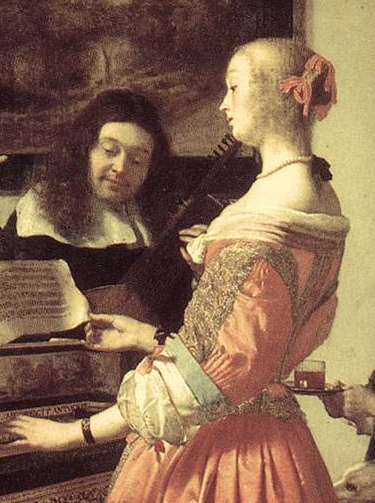
Do not be fooled: Women do not have to be Xena to be powerful in eras where men were in control. (“Duet” by Mieris Frans)
Female characters can be challenging to write, particularly when they are placed in male-dominated worlds/eras, and often come in two extremes: damsels-in-distress/story wallpaper/the romantic interest or a man with boobs. Writers, in many cases, seem to think that to have a strong female character, they have to have great physical strength. While it is true that modern audiences expect “strong” female characters, they also want them to be real, not just Rambo with boobs.
My fantasy novels are based on a continent that is patriarchal — albeit the different countries have different views of women’s place in society and their rights — yet I am a woman, so why would I choose such a set up? The answers is quite simple: I like to challenge my characters — female or male, it does not matter. A patriarchal world also allows me to explore social issues, some that are still present today — while not necessarily to the same extreme — thus challenging my own writing skills. Personally, it also makes me smile at my female characters’ abilities to overcome in their own unique ways; just like women today, each of my female characters have their own identities and thoughts on what it means to be a woman, thus they handle themselves differently.
When I approach my characters, who live in an era similar to the late 1600s-early 1700s, I often take inspiration from historical women. Not all were powerless and subservient to the men in their life, albeit there were victims to the system and those who had no thought of ever going against the flow.
Noblewomen and queens — like Elizabeth I, Eleanor of Aquitaine, Catherine the Great, Catherine de’ Medici and many more — wielded eminence power from influence of their husbands and their sons to reigning solo or as regents. Patronage was another sphere of influence these women had. Isabella of Castile had to struggle for her birthright, but once in power, she reformed her country while also pulling it out of debt. Isabella’s daughter, Catherine of Aragon, was also very impressive in her own right, serving as the first female ambassador in European history and as regent of England while her husband, Henry VIII, was away in France; unfortunately, Catherine also met great misfortune due to her husband’s ambitions and the patriarchal system.
Christine de Pizan
Noblewomen were not the only movers in shakers in history with women finding ways of expressing themselves spiritually and through writing. Christine de Pizan was a medieval writer who wrote in the vernacular (in her case Middle French) and challenged misogyny. Julian of Norwich is another woman writer, and her “Revelations of Love” is believed to be the earliest work in English that was written by a woman.
Another woman of interest is Hildegard von Bingen, who was a jack-of-trades of sorts. Hildegard was a writer, composer (there is a lovely CD with some of her songs), philosopher, mystic, abbess, visionary and polymath; she even dabbled in botany and medicine. Hildegard transcended the bans that forbid women from teaching scripture and even corresponded with popes, statesmen and emperors.
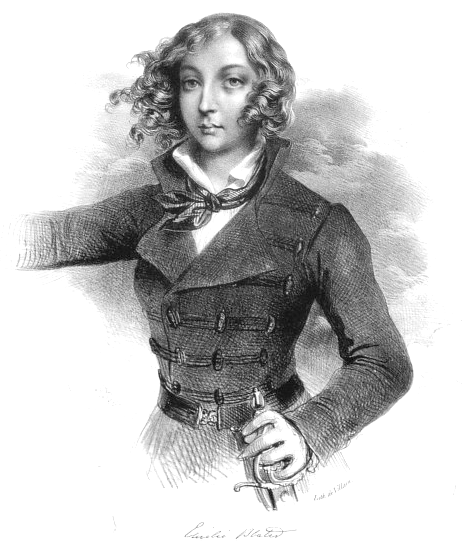
Emilia Plater
Of course, there were some women kicking butt, such as Joan of Arc, and much later, Emilia Plater, a Polish-Lithuanian noblewoman and revolutionary. However, such women, like Joan and Emilia, are rare and far between, so depending on your world or the era you are working in, there probably will not be many women in such positions, but that does not mean that a point can’t present itself where you female character can pick up arms: The only requirement is that it is done in a manner that is believable for the setting.
There are several other women throughout history and beyond Europe who are bound to inspire writers; I only had so much space and so very little time to barely scrape the tip of the iceberg.
It is, however, important to note, while crafting female characters in patriarchal settings, writers need to consider that their characters will still be the product of the era/culture that they grew up in. While your female character might voice radical ideas for their time, it is highly unlikely their ideas would go quite as far as modern day viewpoints. Similarly, not all women will be of the same opinion, so it is good to have a variance of characters with different viewpoints to ground each other. Writers should also realize that social changes will not occur instantaneously with sudden change being unbelievable. One simple has to look at our world with racial integration and equal rights.
Similarly, not only the oppressed will have radical views. There have been men throughout history who have stood next to women, voicing women’s right to education and so on.
I highly recommend hitting the books, as it were, and researching different eras, particularly books that focus on women. There are a lot more out there as historians explore women’s place in history, a subject that for the longest time went ignored. In particular, I recommend “The Cambridge Companion to Medieval Women’s Writing,” which delves into medieval women’s lives and experiences through various kinds of text — please note, it is not easy reading. Of course, there are several other women studies books, in addition to individual biographies, to choose from.
Whether on the computer or on paper, writers need to consider creating personal style guides.
I’m not talking about “The Chicago Manual of Style,” “AP,” “MLA,” or any of the rest — no, I’m talking about writers creating their own personal style guide tailored to their novel or series — particularly fantasy and sci-fi writers. Why? Speculative fiction writers in general are prone to using names even words that are not English; the same could also be applied to writers in other genres, too. After all, especially if you have a cast of several, spellings can become muddled over the course of a long manuscript, even if they are only morphed by a letter or two.
These inconsistencies can add up during revisions, taking time to correct and, in some cases, determine the originally intended spelling. A personal style guide cuts down on this time by being a compilation of all the correct spellings in one handy place. Beyond helping with revisions, style guides will also help while writing.
I started my own personal style guide after one of my readers suggested it, and it has more than proved its worth. I have been able to use it to help straighten out a few spellings that were a few letters off from previous entries, in addition to looking at it for spellings rather than having to pour through previous chapters hunting for words. Since words are placed in alphabetical order, I can easily find entries to settle any questions I might have.
Beyond setting different spellings in stone, I have also included dictionary-like definitions or little notes for myself and eventually hope to include pronunciation guidelines. Thanks to Microsoft Word I have been able to use bookmarks and in-document hyperlinks to make for easy navigation to each letter section and back to the top, thus making my job as a writer much easier.





 Blood & Ink